How mouthwash alcohol becomes EtG in urine
Most antiseptic mouthwashes in the United States contain ethanol as a solvent and antiseptic — Listerine antiseptic, for example, is 21.6% alcohol by volume, and many store brands match it. A standard rinse is 20 mL swished for 30 seconds, twice a day, and spat out. You are not supposed to swallow it, but swallowing is not the point: the lining of the mouth absorbs a small amount of ethanol directly, and a little is inevitably swallowed with saliva.
Once that ethanol reaches the bloodstream, the liver handles it exactly as it handles ethanol from a drink. Most of it is oxidized to acetaldehyde and then acetate, but a tiny fraction — well under 1% — is joined to glucuronic acid to form ethyl glucuronide (EtG). The kidneys excrete EtG in urine, and that is the molecule an EtG test measures. So a mouthwash positive is a true positive at the chemistry level: the EtG is real, even though no drinking happened. The question is never whether the molecule exists — it is whether there is enough of it to cross the cutoff your program uses.

Two things keep the numbers small. First, the dose is tiny: a 20 mL rinse at 21.6% alcohol holds about 4 mL of pure ethanol, and most of it goes down the drain. Second, EtG formation is a minor metabolic pathway, so only a sliver of the absorbed ethanol ever becomes EtG. That is why study results cluster in the low hundreds of ng/mL at most — and why the cutoff matters more than the rinse itself.
What the studies actually found
Researchers have tested this directly, and the results are remarkably consistent across two decades: mouthwash produces real but low EtG, it peaks quickly, and it does not accumulate day to day.
| Study | What volunteers did | Mouthwash | Highest urinary EtG | What it means |
|---|---|---|---|---|
| Costantino et al., 2006 — large single exposure | 9 volunteers gargled a full 4-oz bottle over 15 minutes; urine collected for 24 hours | 12% ethanol | Above 300 ng/mL (12 of 39 samples above 100 ng/mL; peaks within 12 hours) | A very large rinse volume can cross 100 and 200 ng/mL, but stayed below 500 |
| Costantino et al., 2006 — normal routine | 11 participants gargled 3 times daily for 5 days; first-morning samples collected | 12% ethanol | Below 120 ng/mL (16 of 55 morning samples above 50 ng/mL) | Normal rinsing habits stay low — and morning-after samples are the lowest |
| Reisfield et al., 2011 — intensive use | 10 subjects gargled 4 times daily for 3¼ days (twice the recommended frequency) | Listerine antiseptic (21.6% ethanol) | 173 ng/mL — a single detectable EtG specimen out of the whole study | Even heavy, sustained use barely registers at sensitive cutoffs |
| Høiseth et al., 2010 — intensive use | 4 subjects used mouthwash intensively in a controlled experiment | High ethanol content mouthwash | None detected — all four subjects negative for EtG and EtS in urine | Some intensive-use protocols produce no measurable EtG at all |
| Reisfield et al., 2021 — PEth check | 16 participants gargled 4 times daily for 12 days | 21.6% ethanol mouthwash | PEth below 20 ng/mL in every participant | The longer-window blood marker also stays negative after heavy rinse use |
The Costantino study deserves a careful read. The volunteers did not rinse normally — they gargled an entire 4-ounce bottle, roughly six normal rinses, in 15 minutes. That exposure produced values above 100 ng/mL, yet only one sample passed 300 ng/mL. The same paper's second study is the realistic one: three normal rinses a day for five days, and first-morning urine never exceeded 120 ng/mL. The gap between the two studies is the whole story — dose and timing, not the mere fact of rinsing.
The Reisfield study sharpens the point. Ten people rinsed with full-strength Listerine four times a day — double the label frequency — for more than three days, with samples collected first thing in the morning and 2, 4, and 6 hours after the final rinse. Only one specimen in the entire study contained detectable EtG, at 173 ng/mL. The authors concluded that the 500 ng/mL cutoff is adequate to distinguish drinking from four-times-daily mouthwash use, while warning that 100 or 200 ng/mL thresholds carry a false-positive risk for regular users. A companion marker, EtS (ethyl sulfate), never exceeded 104 ng/mL.
The cutoff you are tested at changes everything
An EtG result is only "positive" or "negative" relative to a cutoff. The same mouthwash exposure reads very differently depending on which line your program draws:
| Cutoff | Who typically uses it | Normal rinsing (twice daily) | Heavy or large-volume rinsing |
|---|---|---|---|
| 100 ng/mL | Forensic, probation, and monitoring programs that want maximum sensitivity | Usually below the line, but low-level detection possible shortly after rinsing | Likely positive shortly after rinsing — studies show 173–300+ ng/mL |
| 200 ng/mL | Some clinical and workplace programs | Very unlikely to cross | Possible with a very large rinse volume, sampled within hours |
| 500 ng/mL | SAMHSA-aligned clinical and workplace programs; designed to screen out incidental exposure | Effectively cannot cross | Never observed in any mouthwash study — highest reported value stayed below 200 ng/mL at normal frequency, below 350 ng/mL even for a full-bottle rinse |
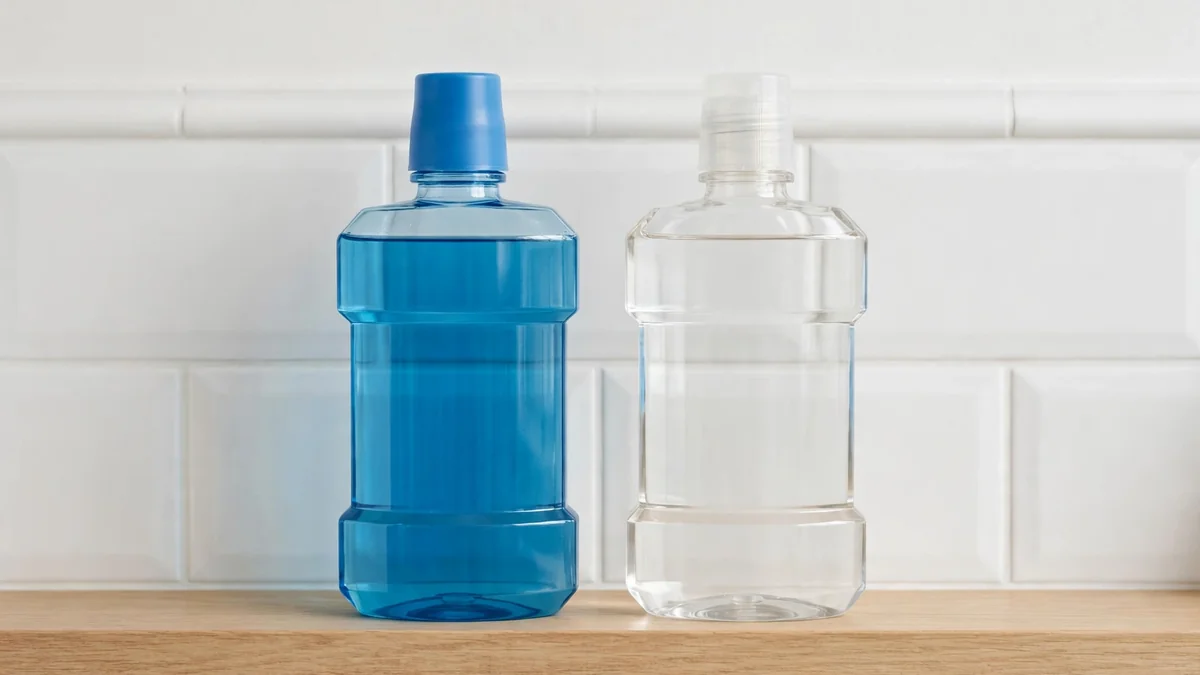
This is exactly why SAMHSA's advisory on alcohol biomarkers recommends the conservative 500 ng/mL cutoff: it was chosen to keep incidental, non-beverage alcohol exposure — mouthwash and hand sanitizer included — from producing positives. If your program uses 100 ng/mL, mouthwash deserves a conversation with the program; if it uses 500 ng/mL, the research says you can stop worrying about it. Our 100 vs 500 ng/mL cutoff guide explains which programs tend to use which, and why. The same incidental-exposure logic applies to our hand sanitizer and EtG test guide — the two exposures stack in the same direction, so a heavy-sanitizer day plus a heavy-rinse morning is the combination most likely to matter at a sensitive cutoff.
Why the studies disagree — and why that is reassuring
At first glance the studies look contradictory: Costantino found EtG above 300 ng/mL, Reisfield found almost none, and Høiseth found none. The differences come down to protocol.
- Rinse volume. Costantino's high numbers came from gargling 4 ounces in 15 minutes — six times a normal rinse. Reisfield's volunteers used normal 20 mL rinses, just more often. Volume, not frequency alone, drove the highest values.
- Sample timing. Costantino collected urine all day after the big rinse and caught the peak within 12 hours. Studies that relied on first-morning samples — Costantino's own second study and Reisfield's — found the lowest values, because EtG from a small exposure clears overnight.
- What counts as "intensive." Høiseth's four mouthwash subjects were negative for both EtG and EtS, a reminder that even deliberate heavy use does not reliably produce measurable EtG. Small exposures sit near the detection limit, where individual variation decides whether anything shows up at all.
- EtS as a companion check. EtS forms alongside EtG from ethanol. In Reisfield's study, the single EtG-positive specimen had no detectable EtS, and the highest EtS values appeared in different subjects. Low, inconsistent companion-marker results are the signature of incidental exposure, not drinking.
The reassuring thread: no study has ever produced a mouthwash EtG value near 500 ng/mL, and the longer-window blood marker PEth also stayed below its 20 ng/mL threshold after 12 days of four-times-daily rinsing. Incidental exposure is real but small, brief, and bounded — the opposite of drinking-derived EtG, which can reach thousands of ng/mL and linger for days. Compare with our one-drink scenario guide.
Three real-world scenarios
Scenario 1: The morning rinse before a morning test
You rinse with alcohol mouthwash at 7 a.m. and give a urine sample at 9 a.m. under a 100 ng/mL cutoff. This is the riskiest ordinary pattern: the sample lands inside the peak window Costantino documented (within 12 hours, highest in the first hours). A normal 20 mL rinse is still unlikely to cross 100 ng/mL on its own, but it is the one timing where a low positive is plausible — and where an alcohol-free rinse on test mornings removes the question entirely.
Scenario 2: The heavy rinser
You rinse four times a day with full-strength antiseptic mouthwash and you are in a monitoring program with a 100 ng/mL cutoff. This is the Reisfield protocol, and it produced a single EtG value of 173 ng/mL across days of testing. At 100 ng/mL, that is a genuine risk of an occasional low positive; at 500 ng/mL, it is not a risk at all. If your program uses the sensitive cutoff, cutting back to twice-daily rinsing plus an alcohol-free rinse on test days is the proportionate response.
Scenario 3: The alcohol-free control
You use an alcohol-free fluoride rinse every morning and evening and face the same test. Your EtG risk from mouthwash is zero: with no ethanol in the bottle, the body cannot make EtG from it. Keep the bottle or a photo of its ingredient panel; "alcohol-free" on the label ends the mouthwash discussion before it starts.
To compare incidental exposure against actual drinking, run the numbers through our EtG detection window calculator and read the EtG calculation methodology behind it.
If you are being tested: a practical checklist
- Find out your cutoff. Ask the program whether it uses 100, 200, or 500 ng/mL and whether LC-MS/MS confirmation is automatic. At 500 ng/mL, mouthwash is not a concern; at 100 ng/mL, it is worth managing.
- On test days, rinse alcohol-free. Use an alcohol-free mouthwash or plain brushing on the morning of a test, and skip the antiseptic rinse in the hours before your sample.
- Keep your normal routine otherwise. There is no reason to stop rinsing for days — mouthwash EtG clears within hours, so a test-day switch is enough.
- Disclose regular mouthwash use in advance if your program uses a sensitive cutoff, ideally in writing before any test. Prior disclosure carries far more weight than an explanation offered after a positive.
- If you screen positive and have not been drinking, request LC-MS/MS confirmation with EtS analysis before any decision is made. Confirmation will still detect genuine mouthwash EtG, so frame the discussion around the source and the cutoff, not around a lab error.
- Keep the product label. Whether the rinse is 21.6% ethanol or alcohol-free determines which explanation applies — and a photo of the ingredient panel settles it.
No checklist can give a guaranteed personal prediction: studies report group-level ranges, and rinse volume, timing, and metabolism shift the numbers. Treat published ranges as honest estimates, not promises — the standard behind our EtG calculation methodology.
Frequently asked questions
Can mouthwash cause a positive EtG test?+
Yes, it can — but only at the sensitive end of the scale. In a 2006 study, volunteers who gargled a large volume of 12% ethanol mouthwash produced urinary EtG above 100 ng/mL, with one sample above 300 ng/mL. A single normal rinse is far less likely to cross 100 ng/mL, and no mouthwash study has produced EtG near 500 ng/mL.
Will mouthwash fail a 500 ng/mL EtG test?+
It depends on the cutoff your program uses. At 100 ng/mL, mouthwash-derived EtG can cross the line shortly after rinsing. At 500 ng/mL — the cutoff SAMHSA recommends to screen out incidental exposure — every mouthwash study to date has stayed well below the line, even with four-times-daily use of 21.6% ethanol rinse.
Does alcohol-free mouthwash affect an EtG test?+
No. Alcohol-free mouthwash contains no ethanol, so the body has nothing to convert into EtG. Rinses based on cetylpyridinium chloride, fluoride, or essential oils without alcohol cannot produce EtG. Check the label: if 'alcohol' or 'ethanol' is not in the ingredients, the EtG risk from that bottle is zero.
How long after using mouthwash will EtG show in urine?+
Mouthwash-derived EtG peaks within hours of rinsing and falls fast. In the Costantino study, peak concentrations all appeared within 12 hours of the exposure, and in the Reisfield study, first-morning samples after days of heavy use were mostly negative. It does not linger for days the way drinking-derived EtG can.
Does Listerine specifically cause positive EtG tests?+
Listerine antiseptic is 21.6% ethanol, and it is the product used in the Reisfield studies — four rinses a day for over three days produced only one detectable EtG specimen (173 ng/mL) and no value above 200 ng/mL. The brand is not uniquely risky; any rinse with a similar alcohol content behaves the same way, and normal twice-daily use is lower exposure still.
Can I dispute a positive EtG result I believe came from mouthwash?+
You can present the evidence: the product label showing alcohol content, a record of your rinsing routine, and a request for LC-MS/MS confirmation with EtS analysis. Because mouthwash-derived EtG is genuine EtG (not a screening artifact), confirmation will still detect it — the argument is about the source and the cutoff, not about a lab error. This is educational information, not legal advice.
Evidence and limitations
This article summarizes primary research on incidental ethanol exposure and EtG testing. Group-level findings cannot predict one person’s result.
- Costantino A, et al. (2006) — the effect of the use of mouthwash on ethylglucuronide concentrations in urine (Journal of Analytical Toxicology)
- Reisfield GM, et al. (2011) — ethyl glucuronide, ethyl sulfate, and ethanol in urine after intensive exposure to high ethanol content mouthwash (Journal of Analytical Toxicology)
- Høiseth G, et al. (2010) — levels of ethyl glucuronide and ethyl sulfate in oral fluid, blood, and urine after use of mouthwash and ingestion of nonalcoholic wine (Journal of Analytical Toxicology)
- Reisfield GM, et al. (2021) — blood phosphatidylethanol concentrations following regular exposure to an alcohol-based mouthwash (Journal of Analytical Toxicology)
- DailyMed (NLM) — Listerine Cool Mint Antiseptic drug label: alcohol 21.6%, rinse 20 mL for 30 seconds twice daily
- SAMHSA Advisory: The Role of Biomarkers in the Treatment of Alcohol Use Disorders (2006, revised 2012) — the 500 ng/mL cutoff recommended to screen out incidental alcohol exposure